Yvon Poirier, July,
2006
Although extremely
recent, the Brazilian Forum of Solidarity
Economy (FBES) is an inspiration which is
also rich in lessons on how to organize oneself
as a network.
At
the time of the first World Social Forum held
in Porto Alegre in 2001, participants from
various areas of Brazil decided to work together
to construct of a common platform in order
to build an alternative economy to the dominant
neo-liberal one. Two years of debates will
have been necessary in order to agree on a
charter of principles and a common platform.
Created in June of 2003 during the III Brazilian
Solidarity Economy Plenary Meeting, the Brazilian
Forum of Solidarity Economy (FBES) is nowadays
the national authority in charge of the organization,
discussions, preparation of strategies and
mobilization of the Solidarity Economy movement
in Brazil. The FBES represents the Solidarity
Economy movement regarding the public authority
(at federal, state and local level, through
its National Coordination and the State and
Local Forums), and domestic and international
organizations, networks and associations.
Brazil is a vast country of more than 180
million inhabitants, divided in 27 states.
Thus, the FBES created its organization based
on Forums in each of the 27 states and 16
national organizations or entities. The National
_ Coordination is made up of 97 people, three
per state and 16 from the other organizations.
This coordination meets twice per year. Furthermore,
a National Executive Coordination comprised
of 13 individuals ensures a regular follow-up
of the FBES. In support of the FBES, a National
Executive Secretariat composed of 3 persons
supports and leads the whole, ensures the
information flow, in particular through a
newsletter distributed to over 4000 subscribers.
President Lula, elected in 2002, carried
out his promise to create a National Secretariat
the Solidarity Economy (SENAES). The FBES
and the SENAES organized eight joint Work
Groups (WG) in order to concretely promote
Solidarity Economy in Brazil: communication,
geographic census, legal frameworks, public
policies, production, marketing and consumption,
international relations, solidarity finances
and training.
At present, the FBES is very active in order
to promote legislative changes. The years
of dictatorship did not favour a suitable
legislative framework. Therefore, more than
50% of the 14,000 companies listed are associations.
However, the legal framework of associations
is not adapted to specificities and the diversity
of the businesses of solidarity economy. In
the same way, the law of cooperatives, instituted
during those years, supports mostly large
cooperatives (mainly agri-business). For example,
one needs a minimum of 21 members to create
a cooperative and the requirements of incorporation
and other formalities are such that they put
a brake on solidarity economy ventures. Thus,
only 8% of the listed businesses are cooperatives.
In June, a first national Conference of scale
took place, gathering more than 1,200 participants
designated by the forums in the 27 states.
In the weeks which preceded this Conference,
more than 10,000 people took part in these
27 official state forums.
The Conference was convened by three Departments:
Social Development, Agriculture Development,
and the SENAES (which is the Department for
Employment and Work). The FBES was responsible
for a vast movement of mobilization in the
states, in order to assure debates and to
broaden the participation of the actors of
the civil society and the local governments
which were not yet aware of Solidarity Economy.
The topic of this Conference was: Solidarity
Economy as a strategy and policy of development.
It is interesting to note that the BFSE does
not yet have the status of a legal association.
However, this does not prevent it from having
an operation of scale. In comparison with
what we know elsewhere, it is undoubtedly
possible to say that it is a network, even
an organization.
The word “forum” was retained
because its original meaning signifies “public
place”. Dictionaries give the following
definition: “a place where a people
held their assemblies and where the public
affairs were discussed”.
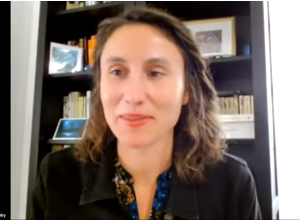
This article was written following exchanges
and discussions with the executive secretary
of the FBES, Daniel Tygel, during his mission
in Quebec and elsewhere in Canada last May
15th – 27th. A text presenting FBES
is available at the following address: www.fbes.org.br/internacional
Author: Yvon Poirier
Sustainable Local Development : Newsletter
# 30
Contact: ypoirier <at> videotron.ca